Learning Comes Alive in the Galápagos

Galapagos Study Abroad

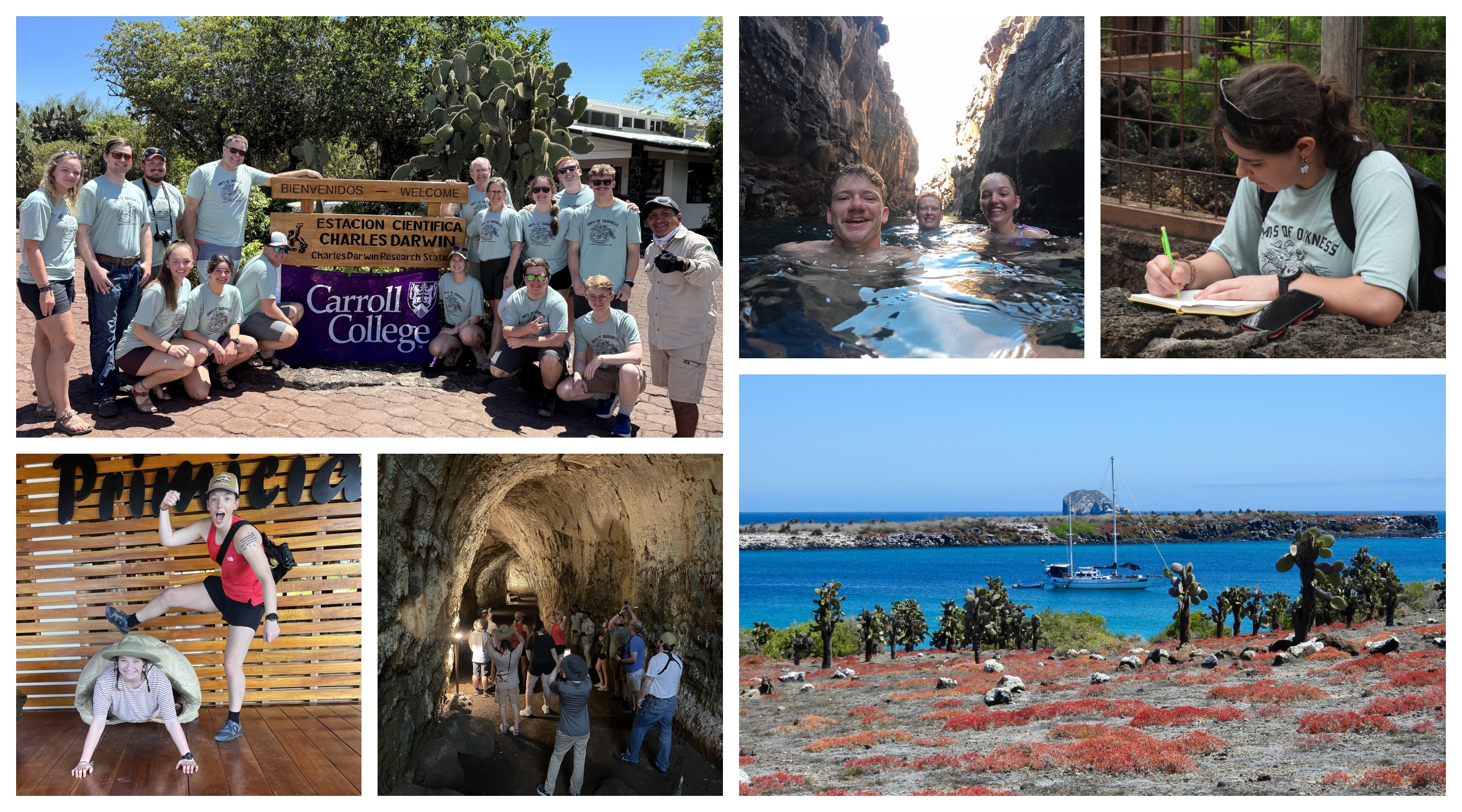
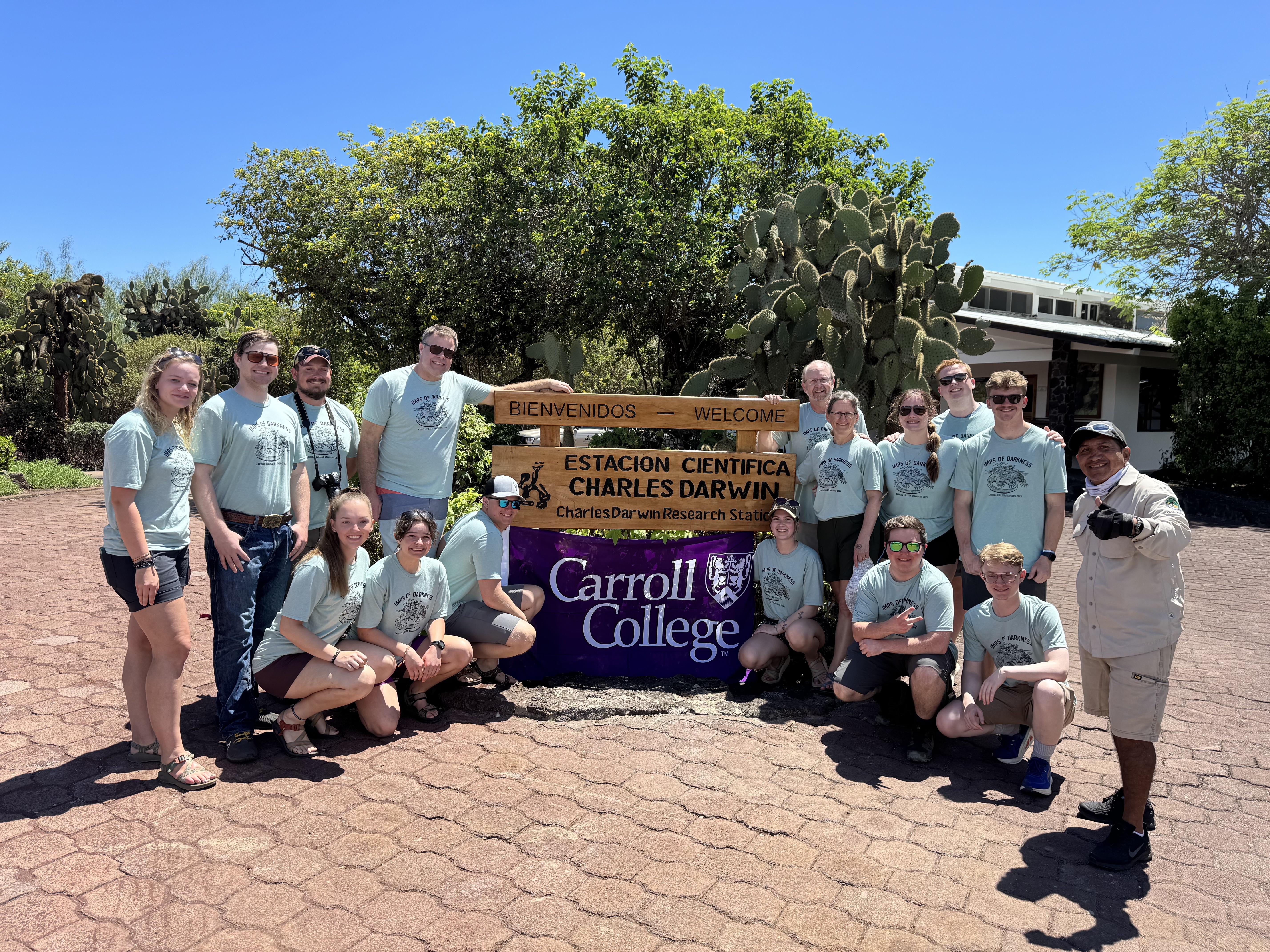
As the fall 2025 semester came to a close, a group of Carroll College students took their studies into the field through a faculty-led study abroad experience in the Galápagos Islands. The week-long program offered students the opportunity to engage directly with concepts they had explored throughout the semester, transforming classroom learning into lived experience.

The program was led by biology professors Brandon Sheafor, Ph.D. and Travis Almquist, Ph.D., as well as Biology Instructor Beth Sheafor and included students Max Gawlik, Jack Conway, Jack Garvin, Elsie Guertin, Kaitlyn Brian, Olivia Banning, Kyle Edwards, Hayden Allie, Allie Eaves, Jackson Barney, Madelynn Eggers, and Joel Moore.

Often described as one of the most biologically unique places on Earth, the Galápagos Islands hold special significance for students of biology, ecology, and environmental science. As Almquist noted, the experience is both academically and historically meaningful.

“Definitely a type of pilgrimage for biologists and the trip of a lifetime. The Galápagos Islands are significant both for their historical importance in shaping the thinking of Charles Darwin and the formation of his ideas regarding evolution and natural selection, but also of equal importance for the ongoing research on the processes that drive evolution, conservation, and the challenges of modern ecotourism,” said Dr. Almquist.

Preparation for the trip began months earlier. Throughout the fall semester, students met weekly to read, research, and present on topics including geology, botany, marine biology, ecology, and history. This foundation allowed students to arrive with a deep understanding of the systems they would encounter.

For Jackson Barney, a senior biology major from Kalispell, Montana, the shared academic experience was a highlight.

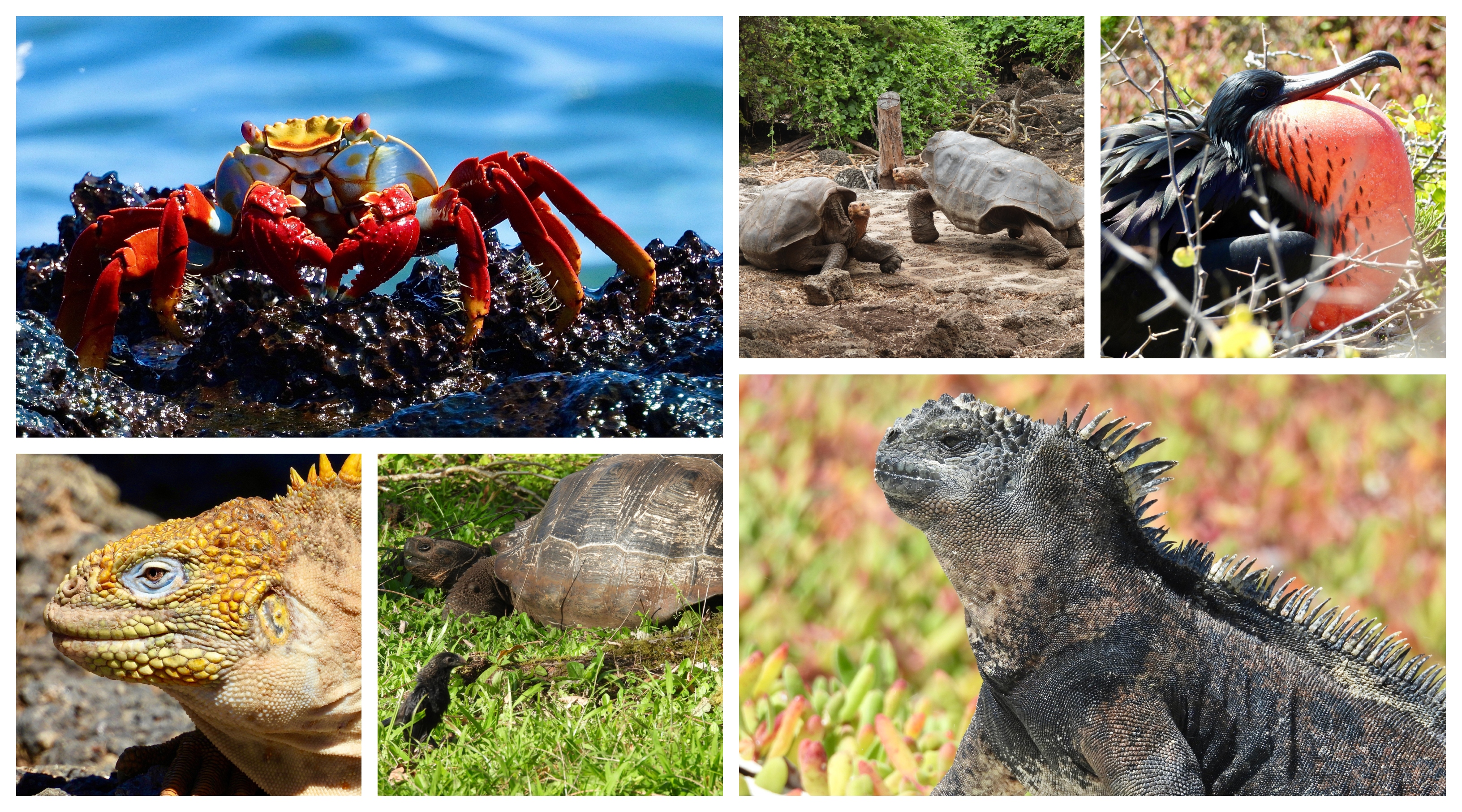
“The best part of this trip was being able to experience meaningful aspects of biology with other students and professors who appreciated it just as much as I did. All the plants and animals were amazing but my favorite were the marine iguanas.”

He also emphasized the impact of learning alongside peers and faculty.

“I would recommend others to take this trip because it is a once in a lifetime experience, especially being able to go with peers and professors. It helped me gain a deeper understanding of the inner workings of ecology and experience a new culture while having a blast!”

Jackson created a video documenting the experience, which can be viewed here.
Galapagos Thumbnail

For Olivia Banning, a senior from Lyons, Oregon, majoring in biology with chemistry and anthrozoology minors, the trip reinforced the value of preparation and application.

“Before traveling to the islands, we spent weeks in class learning about the evolutionary, ecological, and organismal biology of the islands. Having the privilege to experience all that the Galapagos had to offer was an incredible opportunity to see every aspect of the ecosystem interact with one another. This trip gave me the chance to use what I had learned in the classroom to actively understand the world around me better.”

Madelynn Eggers, a senior biology major with a pre-med focus from Missoula, Montana, highlighted the immersive nature of the experience.

“Seeing the Galapagos in person was a once in a lifetime experience. The snorkeling experience that we did throughout the week was amazing; we swam with sea lions, sea turtles, tropical fish, and sharks.”

Galapagos Animals

Jack Conway, a senior from Creswell, Oregon, majoring in biology and chemical biology with minors in chemistry and neuroscience, reflected on how the trip reshaped his understanding of evolution and conservation.

“It was absolutely incredible; the environment was unlike anything we have ever seen before. Each island and its biodiversity were amazing and distinct. Not only the flora and fauna, but also the geography and people, were all valuable to experience. Experiencing real-world examples of evolution and speciation that our professors discuss in class greatly benefited my education.”

He added,

“This trip demonstrated how specific biology and conservation can be, and how remarkable they are as a result of evolution and island isolation.”

Seeing these systems firsthand offered a new perspective.

“It was almost like opening a door to learning, rather than seeing through a window, when encountering these examples of evolution and biology firsthand. We learn about these in the classroom, but in person, it allows you to observe these organisms in a different way that draws you in and intrigues you.”

Allie Eaves, a junior from Power, Montana, majoring in environmental science with a focus in biology, described the experience as transformative.

“Studying abroad in the Galápagos was an adventure beyond words, from hiking across volcanic landscapes to diving among vibrant marine life. Witnessing the uniqueness of each islands’ biodiversity firsthand was like stepping into the history books and seeing the pieces of the evolutionary puzzle fall into place.”

Together, these reflections capture the impact of learning that extends beyond campus. Through faculty-led study abroad and other experiential opportunities, Carroll students continue to connect knowledge, curiosity, and purpose in ways that prepare them for life well beyond graduation.

Galapagos People