
Support from the M.J. Murdock Charitable Trust continues to play a transformative role in expanding student opportunity and advancing research at Carroll College—especially across the natural sciences and STEM (Science, Technology, Engineering and Math) disciplines. Over nearly 40 years of partnership, the Trust has invested approximately $2.457 million in Carroll, strengthening campus infrastructure and fueling faculty-led research that places students at the center of real-world discovery.
"The Murdock Trust believes in the power of scientific research and discovery to promote human flourishing," said Aaron Putzke, Vice President of Scientific Research at the Murdock Trust. "Supporting young scientists through education and research opportunities is fundamental to building a thriving scientific community and honoring Jack Murdock's vision."
One powerful example of this impact is the work of Carroll College’s Biology Department Chair, Dr. Brandon Sheafor, whose Murdock-funded projects have opened enduring pathways for undergraduate students to engage in meaningful, hands-on scientific research.
“The funding I received from the Murdock Charitable Trust directly supported research for myself and seven undergraduate students,” Sheafor shared. “More importantly, this research allowed me to develop a foundation from which a sustained line of inquiry has been established.”
A Growing Portfolio of Student-Driven Research
Dr. Sheafor’s Murdock-supported work spans multiple years and research areas, giving students the opportunity to contribute to pressing questions in animal physiology and environmental biology. His projects have included:
- Research Start-Up Grant for New Science Faculty (2010–2012) – Supported interdisciplinary research into the chemical composition of skin secretions in the Panamanian Golden Frog and the stress hormones of the pika, a high-altitude mammal. Five undergraduate students collaborated across biology and chemistry, gaining early experience in lab and field research.
- Effects of Antimicrobial Skin Secretions and Microbial Communities in Amphibians (2017) – Examined how seasonal and microbial changes influence amphibians’ susceptibility to chytridiomycosis, a disease linked to global amphibian population declines, with students contributing to data collection and analysis tied to conservation science.
A Broader Legacy Across Campus
Murdock’s impact at Carroll extends well beyond individual faculty research. Over the decades, the Trust has helped shape entire academic programs and learning environments, including:
- Expansion of Computer Science Instruction (1981–1987) – Early investments helped bring Carroll into the “computer age,” supporting information systems, faculty training, and the addition of a computer science degree program that laid the foundation for today’s technology-focused curriculum.
- Strengthening Mathematics and Engineering (1994–1995) – Funding supported new computer facilities, library improvements, and interdisciplinary curriculum development, advancing applied learning and critical thinking across STEM disciplines.
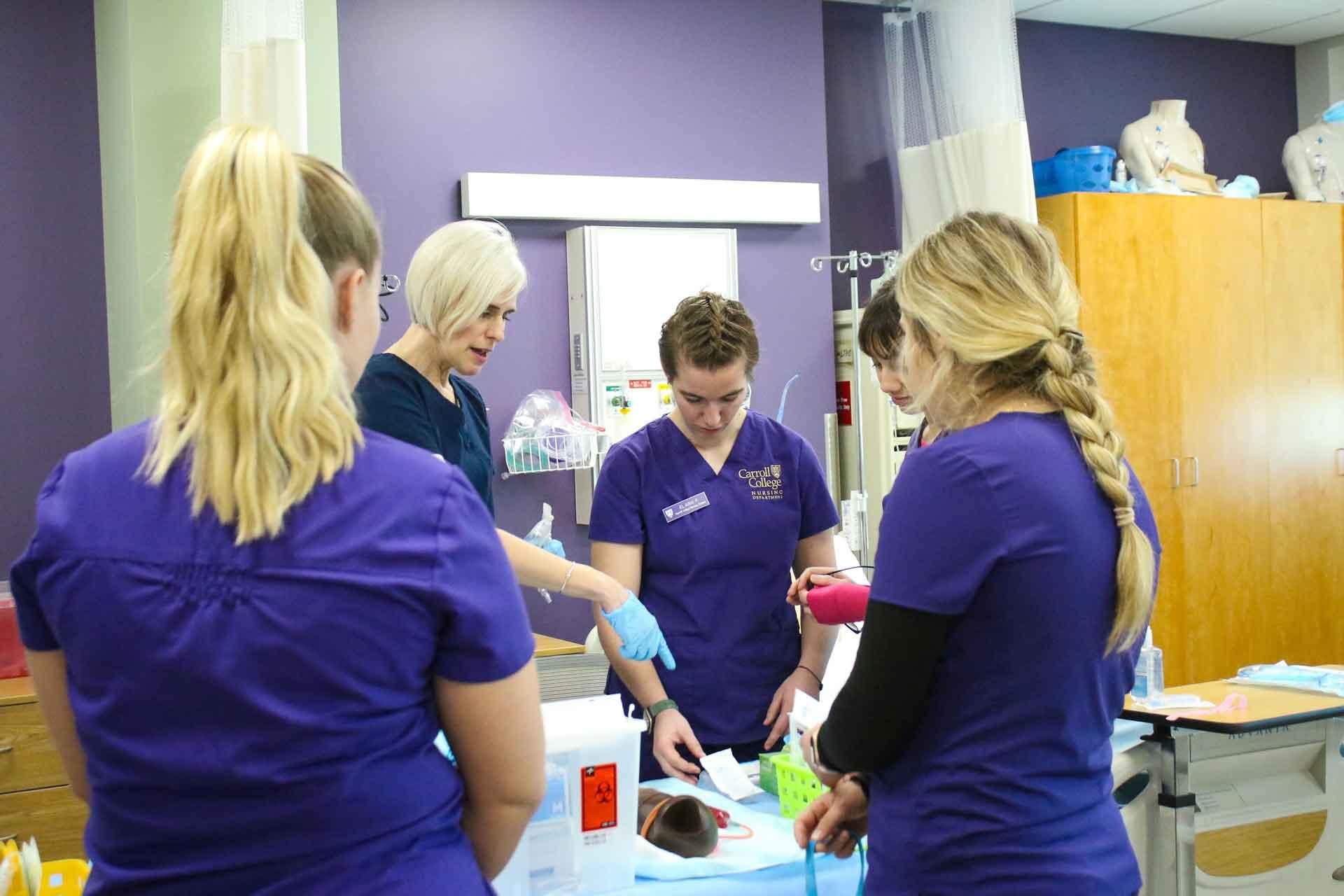
- Renovation and Modernization of Science and Nursing Facilities (2006–2011) – Murdock support contributed to upgraded biology labs, animal care facilities, and state-of-the-art nursing simulation spaces, expanding capacity for experiential learning and doubling enrollment in key programs.
About the M.J. Murdock Charitable Trust
The M.J. Murdock Charitable Trust is a philanthropic foundation that has supported higher education institutions and nonprofits across the Pacific Northwest since 1975. Within its scientific research funding, the Trust focuses on two primary areas of impact: strategic project grants, which provide support for capital projects and instrumentation purchases, and initiative grants, which provide startup and sustaining support for research—particularly in the STEM disciplines. At Carroll, this combination of funding has created a powerful ecosystem where facilities, faculty innovation, and student opportunity grow together.