About
Alumni Spotlight: Cole Mannix ’07 — Rooted in Ranching, Inspired by Carroll
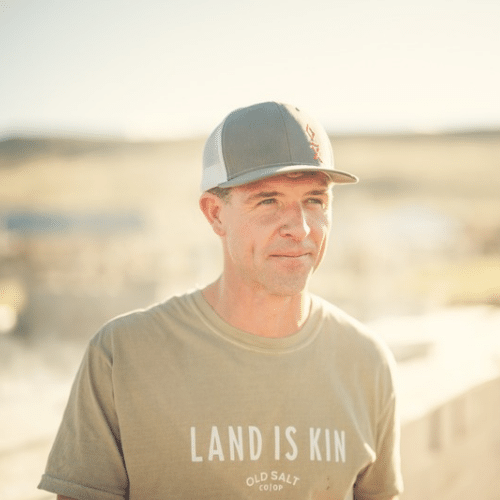
For Cole Mannix ’07, Carroll College was more than a place to earn a degree. It was where his curiosity deepened, his worldview expanded, and the values that would eventually shape his career began to take root. Today, as co-founder of Old Salt Co-op, Cole is bringing together his family's Montana ranching heritage, his passion for conservation, and the lessons he learned at Carroll to build a different kind of food economy.
Finding His Place at Carroll
Cole arrived at Carroll College in 2003 after transferring from Montana Tech. Having grown up on his family's ranch in Montana's Blackfoot Valley, he wasn't entirely sure what direction his education or career would take. He initially hoped to play football, but a broken leg sustained while working on the ranch that summer changed those plans. Instead, he enrolled in summer classes at Carroll, where one of his earliest experiences became a lasting memory.
Cole recalls hiking Mount Helena on crutches with Dr. John Hart's class, Theology of the Land. "It was pretty amazing to have the trail system right near the college," he remembers. The course introduced him to a combination of theology, environmental stewardship, and the natural world that resonated with his ranching background. It was an early glimpse of the connections between faith, land, and responsibility that would influence his future.
Cole went on to graduate in 2007 with degrees in biology and philosophy and a minor in theology. He also served as a peer minister for several years and participated in Carroll's Green Team, which focused on renewable energy, local food, and sustainability. While his academic interests were broad, it was the people at Carroll who made the greatest impression. He fondly remembers Father Dan Shea, Sister Annette Moran, Father Gene Peoples, Father Jeremiah Sullivan, Father Bill Greytak, and professors Ron Wilde and Jennifer (Geiger) Glowienka, now Carroll's president.
Cole particularly remembers spending time in Prof. Ron Wilde's office while taking organic chemistry, a challenging course he enjoyed in large part because of the professor teaching it. He also recalls the personal investment his professors made in students, encouraging them to think critically, ask questions, and grow as individuals. One of his most memorable academic experiences came after receiving an F on his first philosophy paper. Rather than simply accepting the grade, Cole was challenged by his professor to revisit the assignment, put in the work, and try again.
The experience stayed with him. What began as a disappointing grade ultimately helped spark a deeper interest in philosophy, which he would add as a second major before continuing his theological studies in graduate school. Looking back, Cole appreciates that his professors expected more from him than simply completing coursework. They challenged him to become a better thinker and a more thoughtful person.
An Education That Shaped His Worldview
After graduating from Carroll, Cole continued his education at Boston College, where he earned a master's degree in theology, encouraged by Carroll mentors who had studied there. His graduate studies included time in El Salvador and Honduras, where he began examining the ways economic systems and business practices in the United States could affect communities in other parts of the world. Those experiences deepened his interest in social justice and led him to consider how businesses could operate differently.
For Cole, social justice became about more than responding to problems after they occurred. It was about building better systems and making responsible decisions closer to home. Following graduate school, Cole returned to Carroll, serving as the manager of Guadalupe Hall and teaching an Alpha Seminar course to incoming students. During that time, he continued considering how to combine his academic interests with his family's ranching heritage. An opportunity soon emerged when his family's ranch joined Salt of the Earth Ranchers Cooperative, a group of ranches across the western United States working to develop a different approach to the meat industry.
Cole joined the cooperative and spent five years learning the business from the inside. Although the cooperative ultimately failed, the experience proved invaluable. He gained firsthand knowledge of the meat industry, business operations, and the challenges ranchers face in bringing their products to market. Rather than discouraging him, the experience strengthened his interest in finding solutions. He went on to work for Western Landowners Alliance, an organization focused on conservation, land stewardship, and policy across the American West. Through that work, Cole explored how agricultural and environmental policies could better support working landscapes, wildlife habitat, healthy ecosystems, and the families who care for the land. His interests included the Endangered Species Act, agricultural policy, wildlife management, and the economic conditions that influence conservation.
Over time, he began thinking about how to take what he had learned and apply it directly to his home state.
Building Something Different: Old Salt Co-op
In 2020, Cole began developing a business plan for what would become Old Salt Co-op, bringing together his family's ranch and other Montana ranching families who shared a vision for a more sustainable and connected food system. Alongside partners with experience in ranching, culinary arts, butchery, and the food industry, he co-founded a business designed to connect the people raising food more directly with the people eating it.
At the heart of Old Salt Co-op is a belief that a successful food economy should support not only the businesses involved, but also the land, wildlife, and communities that make it possible. Cole describes this philosophy as a "kinship economy," an approach that recognizes the relationships between people, food, land, and place. Rather than viewing agriculture solely through the lens of production and profit, Old Salt seeks to build a system in which ranching families can thrive while caring for the landscapes that sustain them. What began as an idea in 2020 has grown into an expanding Montana business.
Today, Old Salt Co-op serves as the parent company for six businesses, including restaurants, USDA-inspected meat processing, wholesale meat distribution, and direct-to-consumer meat sales. The cooperative now employs approximately 50 full-time employees, with ambitious plans to continue expanding its presence across Montana. Cole says the company hopes to add 10 more restaurants in the state over the next three years. Through each of these ventures, Old Salt is working to create more opportunities for Montana ranchers while giving consumers a stronger connection to where their food comes from.
For Cole, the work is about much more than selling meat. It's about creating a food system that supports family ranches, encourages responsible land stewardship, produces nourishing food, and strengthens local economies.
Bringing People Together at the Old Salt Festival
One of Old Salt Co-op's most visible initiatives is the annual Old Salt Festival, held on Cole's family's ranch in Montana's Blackfoot Valley. The festival brings together ranchers, chefs, conservationists, musicians, makers, and families for a celebration of food, land, and community. Now approaching its fifth year, the festival welcomed approximately 3,000 attendees last year. Held in late June near the summer solstice, the event features wood-fired cooking, live music, conversations about nutrition and conservation, and hands-on experiences that connect visitors with Montana's working landscapes.
Guests can participate in pasture walks, learn about bird habitat, watch working stockdog demonstrations, explore mule packing, and visit a large marketplace featuring artisans and makers. The festival also creates space for conversations about how investment, business, and agriculture can contribute to healthier communities and landscapes.
For Cole, it is an opportunity to bring people together around a shared vision. The setting is especially meaningful. The ranch remains a family operation, with Cole's parents, siblings, uncles, cousins, and other relatives involved. Hosting the festival there allows him to share not only the mission of Old Salt, but also the place and family traditions that helped shape it.
Sharing the Story Beyond Montana
Old Salt Co-op's work is also gaining attention beyond Montana. The business is featured in the final episode of How to Change the World, a 10-part film series produced by World Within, an investor in Old Salt. The series highlights social enterprises and the people working to develop new approaches to economic and community challenges.
The Old Salt episode is scheduled to premiere on YouTube on November 5, 2026, offering viewers an opportunity to learn more about the cooperative's mission and the people behind it. Cole hopes the film will introduce a wider audience to the possibilities of building businesses that place people, land, and long-term stewardship at the center of their work.
The Carroll Values That Remain
When Cole reflects on his time at Carroll, he doesn't point to a particular career path or professional skill as the most important thing he gained. Instead, he credits Carroll with helping him develop a deeper understanding of what mattered to him and a willingness to continue asking questions.
"I didn't really go into Carroll having a career in mind, and I didn't come out of Carroll having a career in mind," he shares. "But I formed a sense of what mattered and a curiosity." He remembers arriving at Carroll with strong opinions and leaving with a greater appreciation for how much he still had to learn.
One memory that stands out is a sign on Sister Annette Moran's office door featuring a quote attributed to Flannery O'Connor: "The truth will make you odd."
For Cole, Sister Annette, Father Dan Shea, and other Carroll mentors helped him recognize the importance of curiosity, humility, and thoughtful conversation. They encouraged him to ask more questions rather than rush to conclusions. He also remembers the friendships he formed at Carroll, many of which remain an important part of his life today.
That combination of intellectual curiosity, personal relationships, and a values-centered education continues to influence his work. Cole says the most rewarding part of his career is being able to bring together his ranching heritage with the worldview he began developing at Carroll. "I get to integrate where I came from with how I see the world, and I get to do it really close to home."
For someone whose professional journey has included theology, conservation policy, ranching, and entrepreneurship, that sense of connection has become particularly meaningful. His work allows him to honor where he came from while helping shape what comes next.
Family, Community, and Staying Connected
Today, Cole lives in Helena with his wife, Eileen (Brennan) Mannix ’07, a fellow Carroll graduate who studied biology and played soccer for the Fighting Saints. Although they attended Carroll at the same time, their paths didn't meaningfully cross until after college. Their connection came through a wedding officiated by Father Dan Shea, with whom Cole had maintained a close friendship after graduating. Cole attended the wedding festivities, met Eileen, and later followed up with her. The two eventually married and are now raising their sons, Finn, 10, and Charlie, 7. Both boys enjoy soccer, following in their mother's footsteps.
Eileen works as a physical therapist in Helena, specializing in hand therapy. Cole is quick to acknowledge the important role she has played in supporting his entrepreneurial journey. He credits her steady career and encouragement with helping make the growth of Old Salt Co-op possible. The family remains connected to Carroll, and Cole continues to maintain relationships with the people who influenced him as a student, including Father Dan Shea, whom he still visits for coffee. Over the years, Cole's contributions have also earned recognition. While at Carroll, he received the Michael Murphy Award for student citizenship. He has also been recognized among Helena's 20 Under 40 and was named the Montana Ambassadors' Entrepreneur of the Year in 2023.
Yet his greatest sense of accomplishment comes from something less easily measured: the opportunity to build a meaningful career rooted in family, community, and the values he believes in.
Rooted in the Past, Building for the Future
Cole's journey from a Montana ranch to Carroll College, Boston College, conservation policy, and eventually Old Salt Co-op has not followed a conventional path. But each experience has contributed to the work he is doing today. His story reflects something central to a Carroll education: the importance of developing not only knowledge and professional skills, but also a sense of purpose and responsibility to others.
For Cole, that purpose has come full circle. The ranching heritage that shaped his childhood and the education that broadened his perspective have become the foundation of a business dedicated to strengthening Montana's food system and the communities connected to it. And while Old Salt Co-op continues to grow, Cole remains grounded in the relationships, landscapes, and lessons that brought him here.
From the classroom to the ranch, Cole's story is a reminder that a Carroll education can help shape not just what we do, but why we do it.
Learn More About Cole and Old Salt Co-op
Visit oldsaltco-op.com to learn more about Old Salt Co-op, its Montana ranching partners, restaurants, products, and annual festival. Watch for Old Salt Co-op's feature in How to Change the World, premiering November 5, 2026, on YouTube.